

Our history · Eat the View
We asked the next president to plant a food garden on the White House lawn. On March 20, 2009, ground was broken.
From January 2008 through March 2009, Kitchen Gardeners International, the nonprofit now known as SeedMoney, ran a public campaign called Eat the View. With no advertising budget, it reached millions, drew more than 100,000 signatures and, ultimately, made its way to the first family.
Led by SeedMoney founder Roger Doiron, with support from the Kellogg / IATP Food and Society Fellows program.
The idea was already old
Made sense before, makes sense again
Growing food on the White House grounds was never a new idea, and it was never ours.
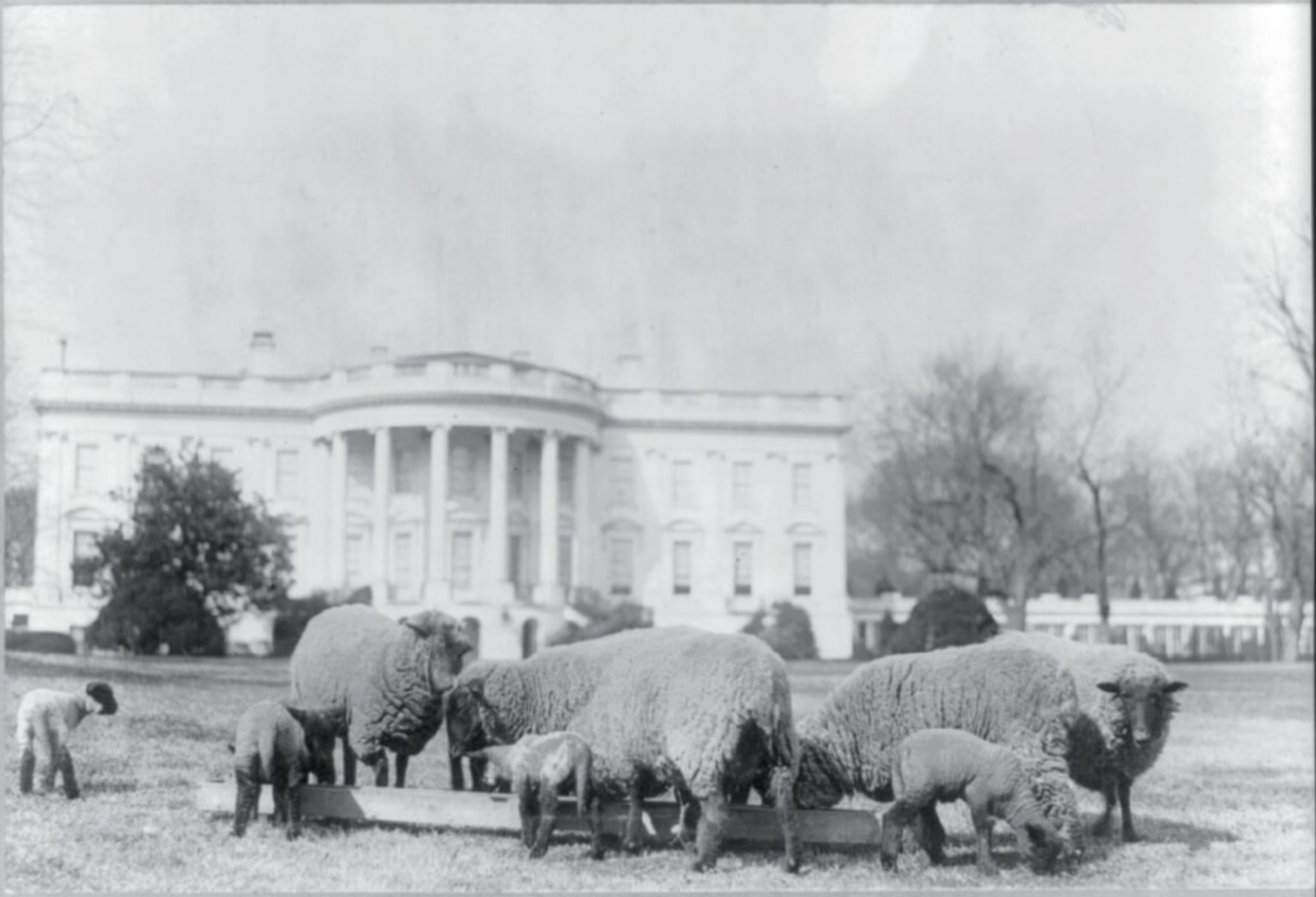
The lawn at 1600 Pennsylvania Avenue has been a working landscape more than once, and almost from the beginning. John Adams, the first president to live in the house, had ground plowed for a vegetable garden but left office before it could be planted. Thomas Jefferson put one in on the southeast side, out of sight of visitors. Woodrow and Edith Wilson kept a flock of sheep on the lawn during the First World War, which saved the manpower needed to mow the grounds and produced wool that was auctioned for the Red Cross. Eleanor Roosevelt planted a victory garden there in 1943, when rationing and pressure on the food supply had millions of Americans growing some of their own.
Two of the good food movement’s best known voices had already called for its return. In 1991 Michael Pollan used a New York Times op-ed, “Abolish the White House Lawn,” to propose that President George H. W. Bush order the Park Service to “rip out the White House lawn.” In December 1995 Alice Waters wrote to President Clinton, asking him to help build demand for sustainable agriculture and to demonstrate it with organic gardens at the White House and the vice president’s residence. Clinton reportedly told her to send the seeds. The garden never went in.
So the first calls for a First Garden had been heard and left unheeded. That was the situation in early 2008, when a two-year fellowship gave Roger the time to try again.
The approach
The idea didn’t need another rock star
Pollan and Waters had both made the case, well and publicly, and it had not moved the White House. Adding a third famous voice seemed unlikely to change that. What the idea needed was a roadie: someone whose job is to make sure the amps and mics are on and turned up, so that other voices, the voices of ordinary gardeners, could be heard.
A roadie still needs equipment and a stage, and we had neither. Kitchen Gardeners International was a small nonprofit without a conventional campaign budget. If we were going to rock the First Lawn, we would have to borrow other people’s: their platforms, their audiences, their attention, their credibility. Every step of the campaign that follows is a version of the same move, trading up one amp for a louder one.
We could not buy attention. We could only earn a small amount of it and then lend it out at interest.
The campaign, step by step
Each of these actions was small. What mattered was that each one handed the idea to a larger audience than the one before it.
-
February 2008
Borrowed a platform
The United Nations Foundation was running an online contest at OnDayOne.org, collecting proposals for the next president to enact on taking office. We posted ours: announce a food garden on the White House lawn, put one of the eight White House gardeners in charge of it, send part of the produce to the White House kitchen and the rest to a local food pantry. The new president would not be breaking with tradition but returning to it.
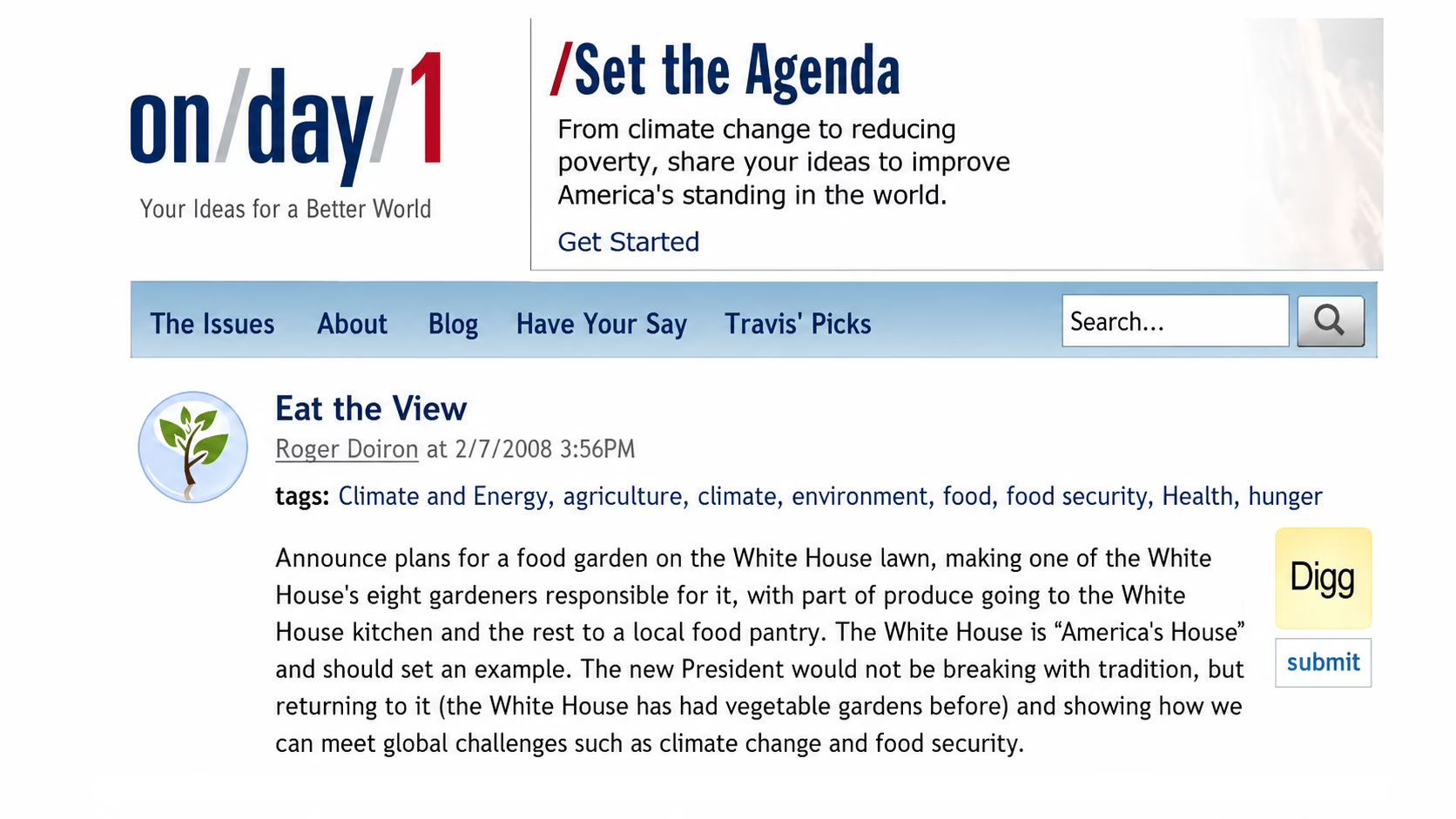
The proposal as posted at OnDayOne.org, February 7, 2008. Then we emailed the KGI mailing list, five thousand gardeners at the time, and asked them to vote. They did, and the proposal moved quickly into first place.
-
April 2008
Traded up to a louder amp
First place on a UN Foundation site was enough to catch the attention of Anne Raver at the New York Times, who wrote about the campaign that April. Roger told her this would not be
a quaint little garden for the White House chef
, but something ambitious enough to cover most of what the White House needed, with the overflow going to a local food pantry. The article brought in more supporters, which is to say a bigger stage.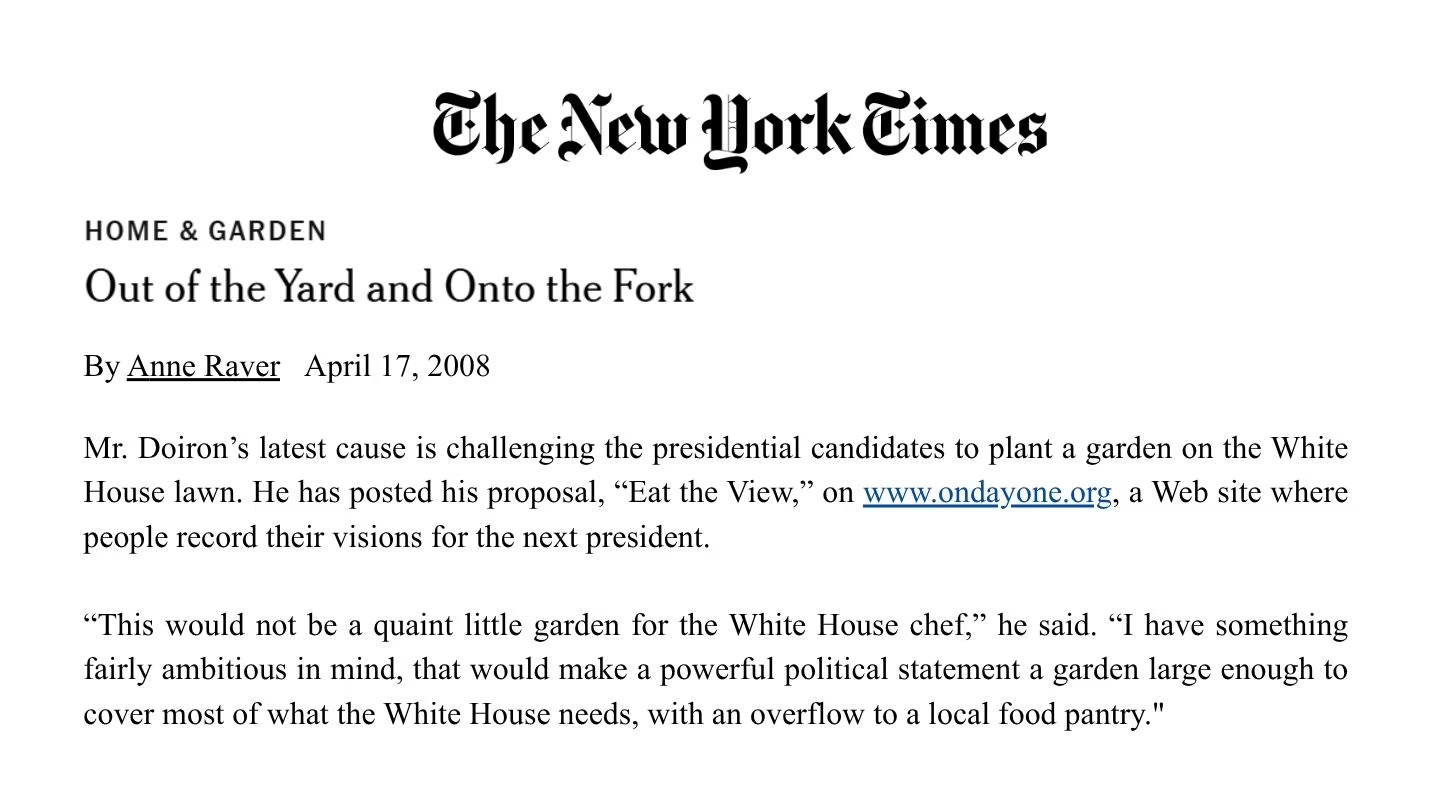
The New York Times, April 17, 2008. Anne Raver’s column was the campaign’s first national coverage. -
June 2008
Built our own stage
The idea had outgrown a single contest entry, so we gave it its own home at EatTheView.org, along with a petition, and built it on a social networking platform with share buttons and widgets. The point was not the site. The point was making it easy for a supporter to pull three more people out of their own network and into the campaign.
-
July 2008
350 newspapers, one syndicated column
The larger web presence is what allowed the syndicated columnist Ellen Goodman to find us. Her column on the campaign, datelined Scarborough, Maine, ran in more than 350 newspapers across the country and a few abroad. That same month came our first television coverage, in a report shown throughout New England.
-
July 2008
This Lawn is Your Lawn
Then came a useful realization. Roger woke up one morning and understood that he also lived in a white house with a sunny south lawn. That metaphor turned into the campaign’s first video, made at home.
This Lawn is Your Lawn, 2008. By October it had gone about as viral as a garden video can hope to go, and it took third prize in the Climate Matters video contest. The prize was airtime on national television, in front of an audience of millions. -
August 2008
Others made it their own
That summer, inspired in part by Eat the View, two people named Daniel and Casey drove a tricked-out school bus across the country and back, asking the next president to plant not just a garden but a whole organic farm. Their project, The WHO Farm, added momentum and a good deal of fun, and it was the first sign that the idea no longer needed us to carry it.
-
September 2008
Sold the White House lawn on eBay
We do not generally recommend selling things that do not belong to you, particularly federal property. We listed two lots of the First Lawn in the language of a real estate ad: a quarter acre of fertile land formerly used for agriculture, good safe neighborhood, buildings of historic importance nearby, property address 1600 Pennsylvania Avenue. The second quarter acre was subdivided into 10,890 one-foot-square parcels at ten dollars each. Buyers agreed to donate their parcels back to the American people for the digging of a garden in 2009, and got a Certificate of Co-Ownership of the First Lawn for their trouble.
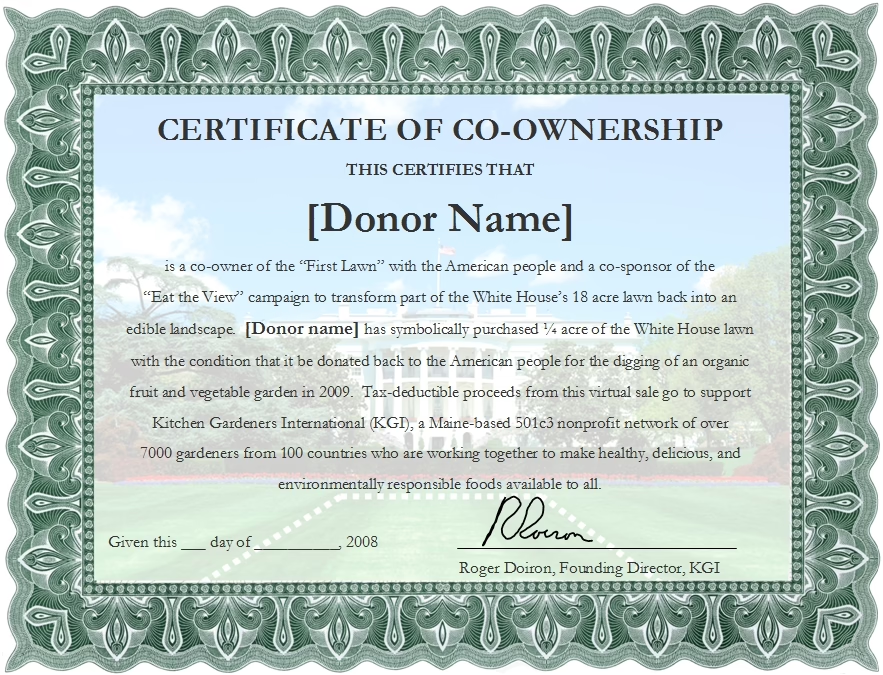
What ten dollars bought. The purchase was symbolic and the proceeds were a tax-deductible donation to Kitchen Gardeners International. Three hundred parcels sold before eBay worked out what was being sold and pulled the listing. The three thousand dollars paid for the animation.
-
September 2008
The Garden of Eatin’
With money in the campaign’s coffers for the first time, we hired a young video artist named Eliot Morrison to tell the history of food at the White House in a way we could not.
The Garden of Eatin’, 2008. Animated by Eliot Morrison, funded by the eBay lawn sale. -
October 2008
Farmer in Chief
Michael Pollan returned to the subject in the New York Times with “Farmer in Chief,” urging the next president to replant an organic victory garden at the White House and send the surplus to local food banks. That article gave rise to another online contest, WhiteHouseFarmer.com, to nominate the American farmer best suited to tend the new garden. Three separate efforts were now pushing on the same door.
-
Autumn 2008
Borrowed other people’s credibility
Through the fall we gathered testimonials from leaders in food, gardening, farming, health and the environment. Many of them came from the Kellogg fellows community, which is one of the quieter reasons the campaign worked at all: the fellowship did not just buy time, it opened a network.
-
January 2009
Won the contest we started in
Eat the View was voted the overall winner of the On Day One competition, out of 81 finalists, with just under four thousand votes. The result generated thousands of email messages to the White House in support of the proposal.
-
January to March 2009
Made the ask directly
After the inauguration we began contacting members of First Lady Michelle Obama’s staff by phone and email, including her chief of staff Jackie Norris and her policy team, Jocelyn Frye and Trooper Sanders. We advocated for the idea, asked our questions and answered theirs. In February Roger traveled to Washington to meet the UN Foundation and do more media work. On the first of March he made the case once more in his own words, in an op-ed in the Chicago Tribune, the Obamas’ home paper, arguing that a new victory garden campaign should start on the White House lawn.
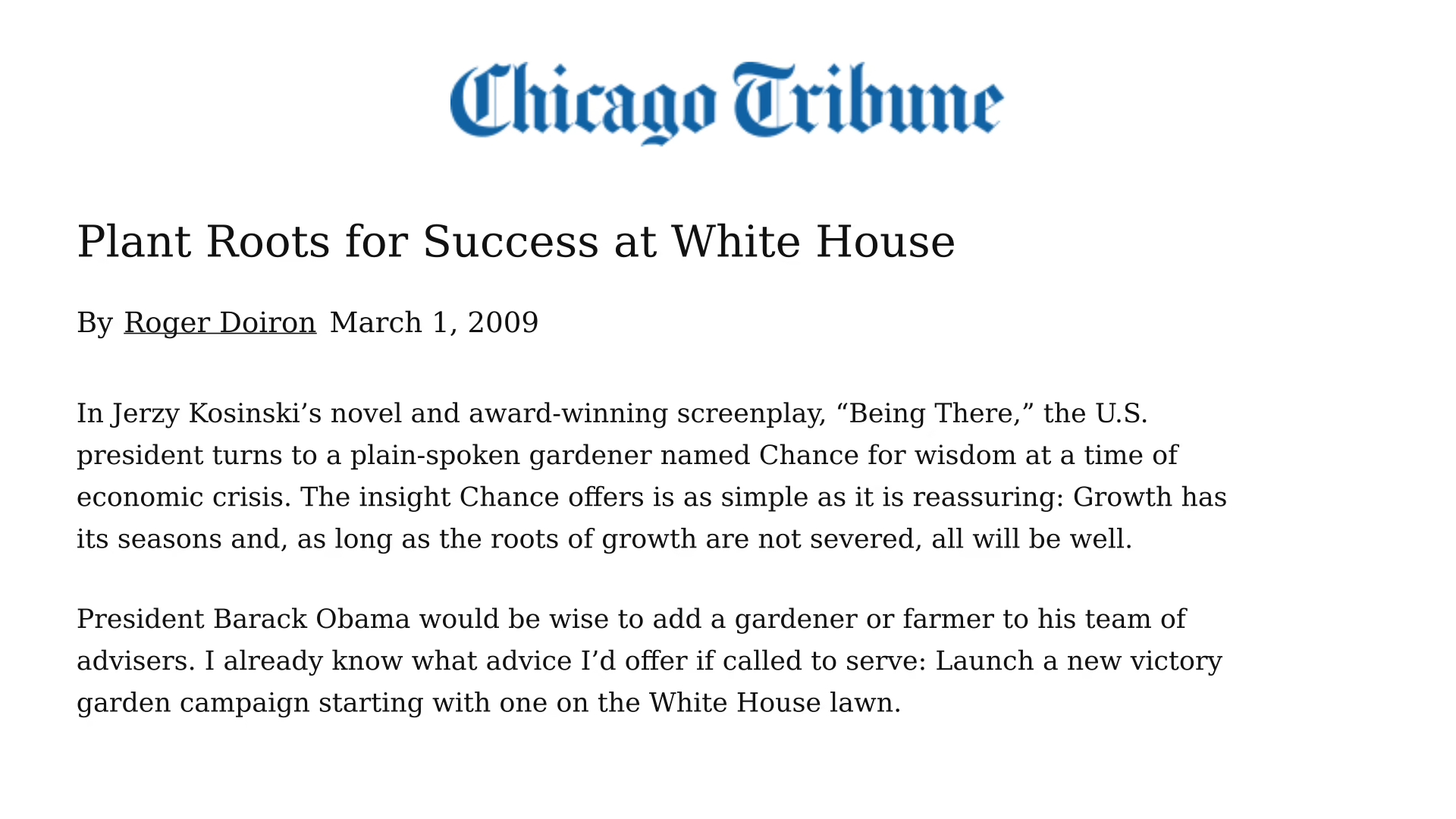
The Chicago Tribune, March 1, 2009. By early March the petition had passed 100,000 signatures across EatTheView.org and Facebook.
The coverage
The idea travelled further than we did.
The Washington Post, the Wall Street Journal, the Associated Press, Agence France-Presse, NPR and the New York Times covered the campaign, and so did the Telegraph in Britain, România Liberă in Romania, and the French and Japanese press. Reporters as far away as Kenya asked whether farmers there could sign the petition and contribute.
Made to be passed along
A campaign with no media budget has to give people something they want to share. These three did most of the work.
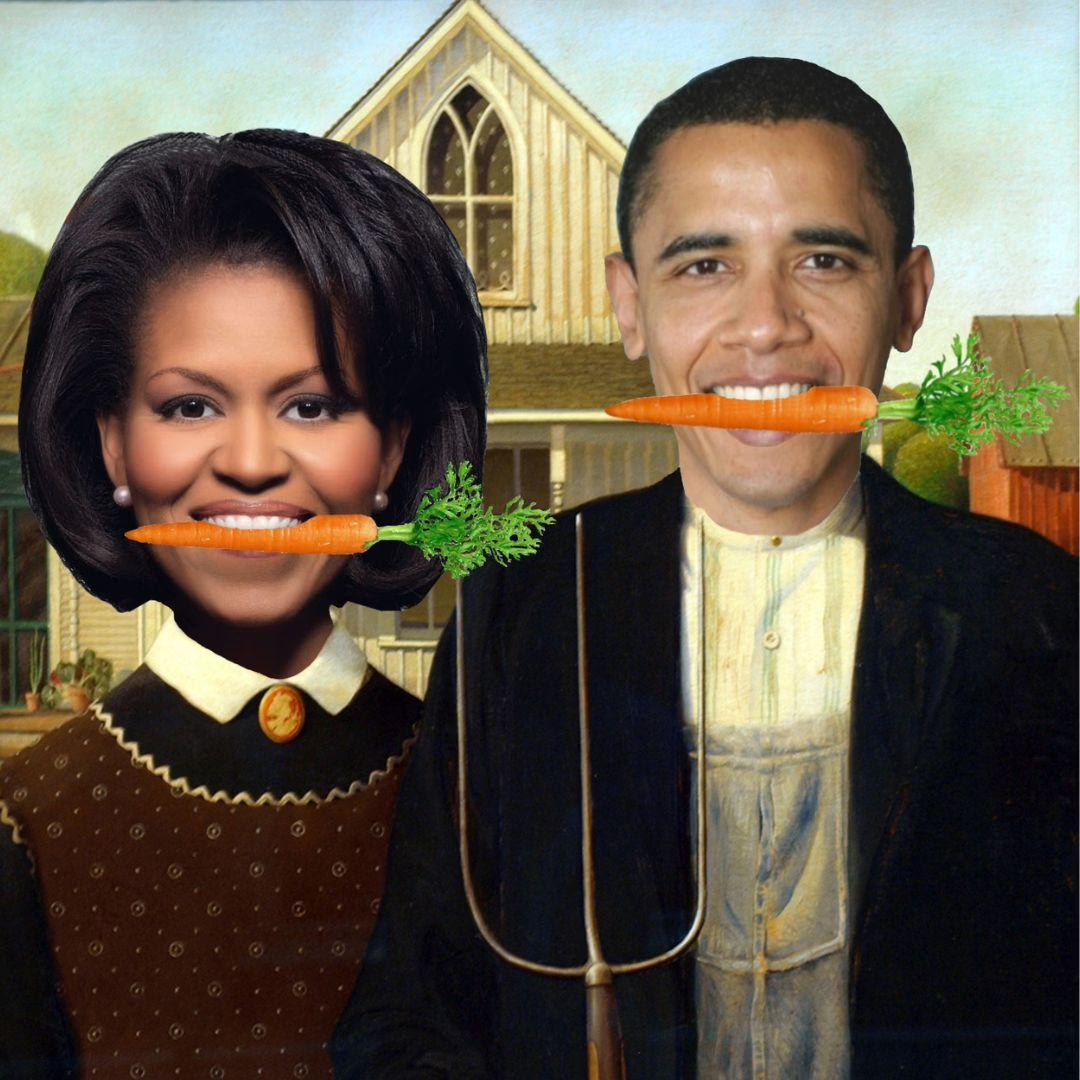
The parodies
We gave Barack and Michelle Obama the American Gothic treatment, and released the campaign’s images in a range of sizes and resolutions so bloggers, social networkers and print journalists could take them without asking. Another widely circulated one photoshopped President Obama’s head onto Roger’s body (this was pre-AI era!), holding a shovel on the South Lawn. These images were easy to share and inspired supporters to create their own.
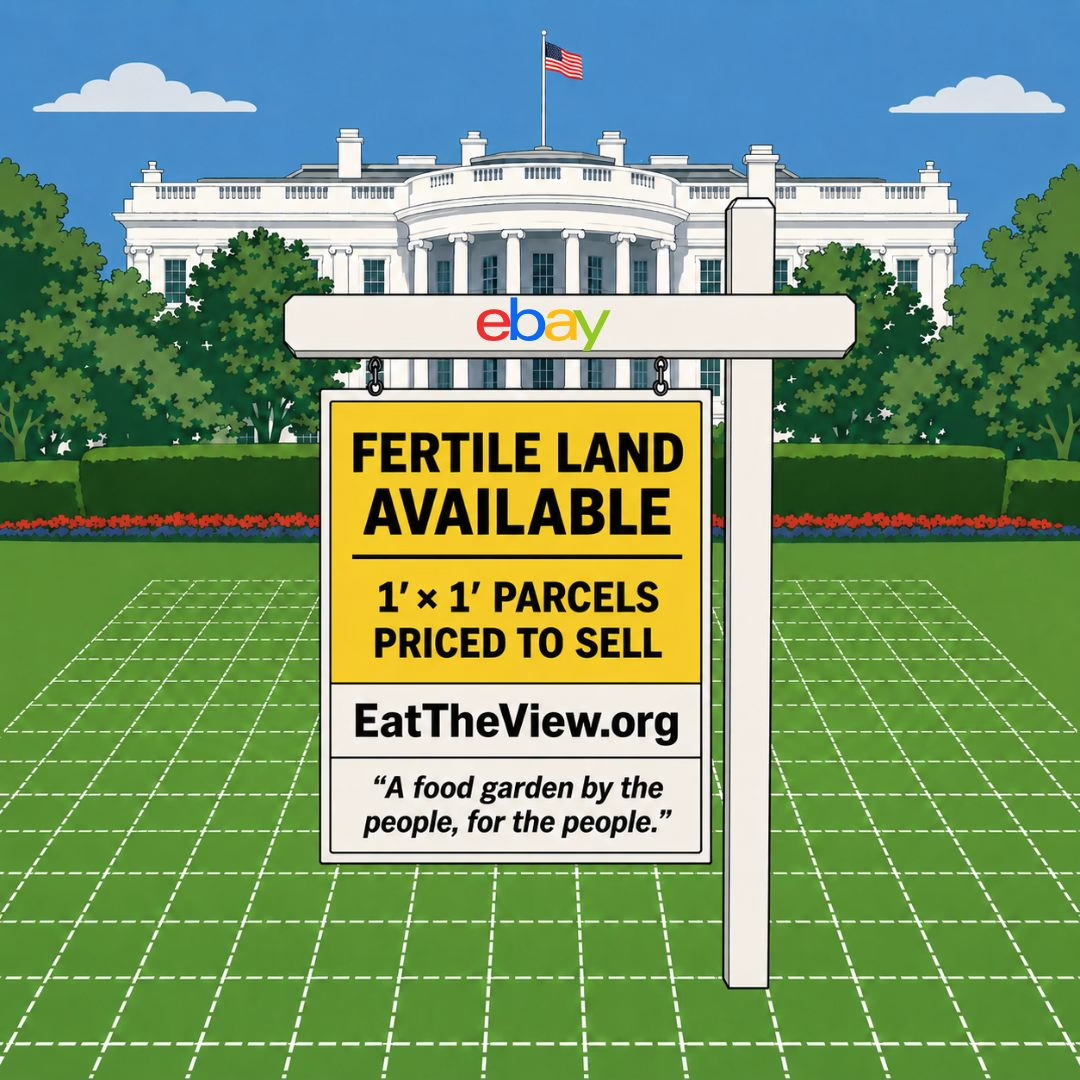
The eBay listing
A quarter acre of the First Lawn, subdivided into 10,890 one-foot-square parcels at ten dollars each, sold on the condition that buyers give them back to the American people for the digging of a garden. Three hundred sold, each one earning its buyer a Certificate of Co-Ownership, before eBay worked out what was going on and took the listing down.
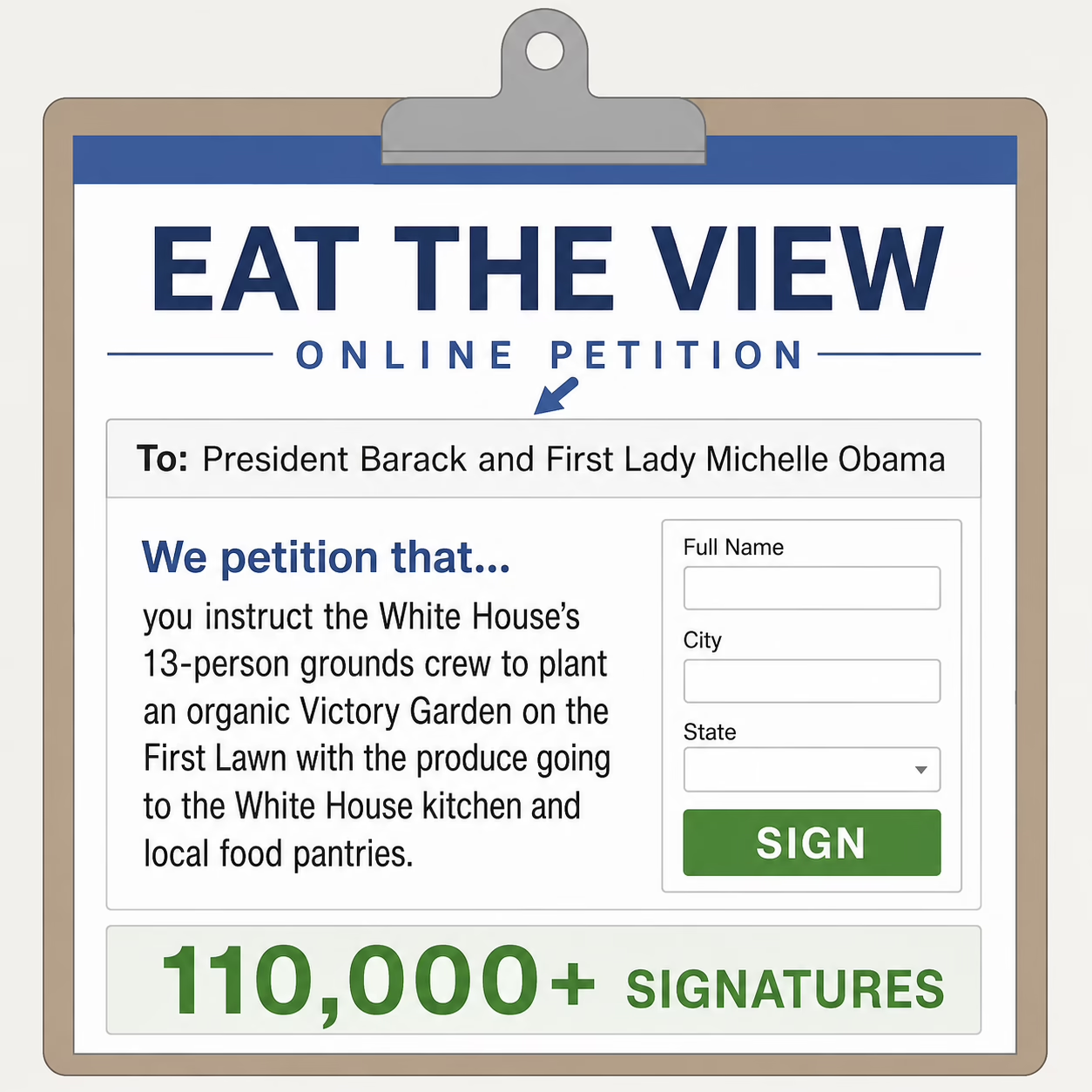
The Facebook petition
Addressed to President Barack and First Lady Michelle Obama, asking them to instruct the grounds crew to plant an organic victory garden on a small part of the White House’s eighteen acres. Signers left their name, city and country, and the list grew in public where anyone could watch it.
March 20, 2009
On the first day of spring, they broke ground.
Michelle Obama dug into the South Lawn with White House chefs and fifth graders from Bancroft Elementary School. An idea first put in print eighteen years earlier, and carried in the last year by tens of thousands of people who signed their names to it, became a garden.
Official White House photograph.
The result
A working garden, not a display
The proposal we posted in February 2008 asked for two things: food for the house and food for the neighborhood. Both happened. Produce from the garden went into meals for the First Family and for guests at White House functions, and the surplus went to Miriam’s Kitchen, a Washington nonprofit that prepares meals and provides services for people experiencing homelessness.
The garden also did the work we had hoped a high-profile garden would do, which was to make an ordinary one seem more possible. That was the argument all along: a garden in a visible place changes what people believe they can grow in an unremarkable one. We cannot prove it, and we would not try. But for one season the most photographed lawn in the country had vegetables on it, and a great many people who had never grown food before went looking for seeds.
Thank you
Who made it happen
Everyone in the KGI community and the wider good food movement who voted for the idea, signed the petition, emailed the White House and passed the campaign along to friends and family. John Adams, Thomas Jefferson and Eleanor Roosevelt, for the precedent. Michael Pollan and Alice Waters, for advocating for this years before we did. The United Nations Foundation and OnDayOne.org, for the platform.
The Kellogg / IATP Food and Society Fellows program, for making the work possible, and our fellow fellows, for dreaming big alongside us and spreading the word. Daniel and Casey of The WHO Farm and Terra of WhiteHouseFarmer.com, for joining the effort and making it creatively their own. President and First Lady Obama, for hearing the voice of the people and leading by example.
And one first family in particular, in Scarborough, Maine, for their patience.
Image credits
South Lawn of the White House, July 2007. Photograph by Ad Meskens / Wikimedia Commons, CC BY-SA 4.0. Cropped from the original.
Sheep on the White House lawn, around 1918. Smithsonian Institution Archives, Record Unit 7355, Martin A. Gruber Photograph Collection. Public domain.
South Lawn groundbreaking, March 20, 2009, and the first kitchen garden harvest, May 17, 2009. Official White House photographs, the second by Samantha Appleton. Public domain as works of the United States government. Their use here is documentary and does not imply endorsement of SeedMoney by the White House, the First Family or any federal agency.
Screen captures and press clippings are reproduced in part for historical reference and remain the property of their respective publishers. Campaign artwork, certificates and videos are by Kitchen Gardeners International, with The Garden of Eatin’ animated by Eliot Morrison.
Now
There are still gardens to plant
Eat the View worked because people power and technology multiplied each other. We had no advertising budget, but we had a mailing list, a petition, share buttons and a couple of homemade videos, and that was enough to turn a few thousand gardeners into more than a hundred thousand voices the White House could count.
SeedMoney is that same equation, aimed at the ground instead of at Washington. Through the SeedMoney Challenge, we give community garden projects the tools to raise money from the people closest to them, and a challenge grant that rewards them for doing it. More gardens get planted, in more places, by the neighbors who will actually tend them. You can see where they are on the impact map.
The White House garden went in more than fifteen years ago. Schoolyard, church lot and housing development gardens still struggle to find the modest sums they need to get started. That is the part we can still do something about, one small grant at a time.